Items for sale / News
Some of our current items for sale and other items of news
19th century Regency Derbyshire Fossil chimneypiece

 19th century Regency chimneypiece with Derbyshire Fossil marble centre tablet set within a Statuary marble frieze.
The Derbyshire Fossil marble jambs with moulded statuary marble foot blocks and corbelled blockings carved with laurel leaves and above jambs.
Height: 48 1/2” Shelf width: 61” Width across jambs: 45” Aperture height: 38 1/2” Aperture width: 39”


‘Time after Time – May 2015 – published CulturedLifestyle.com


Bronze Ho Ho bird circa 1860
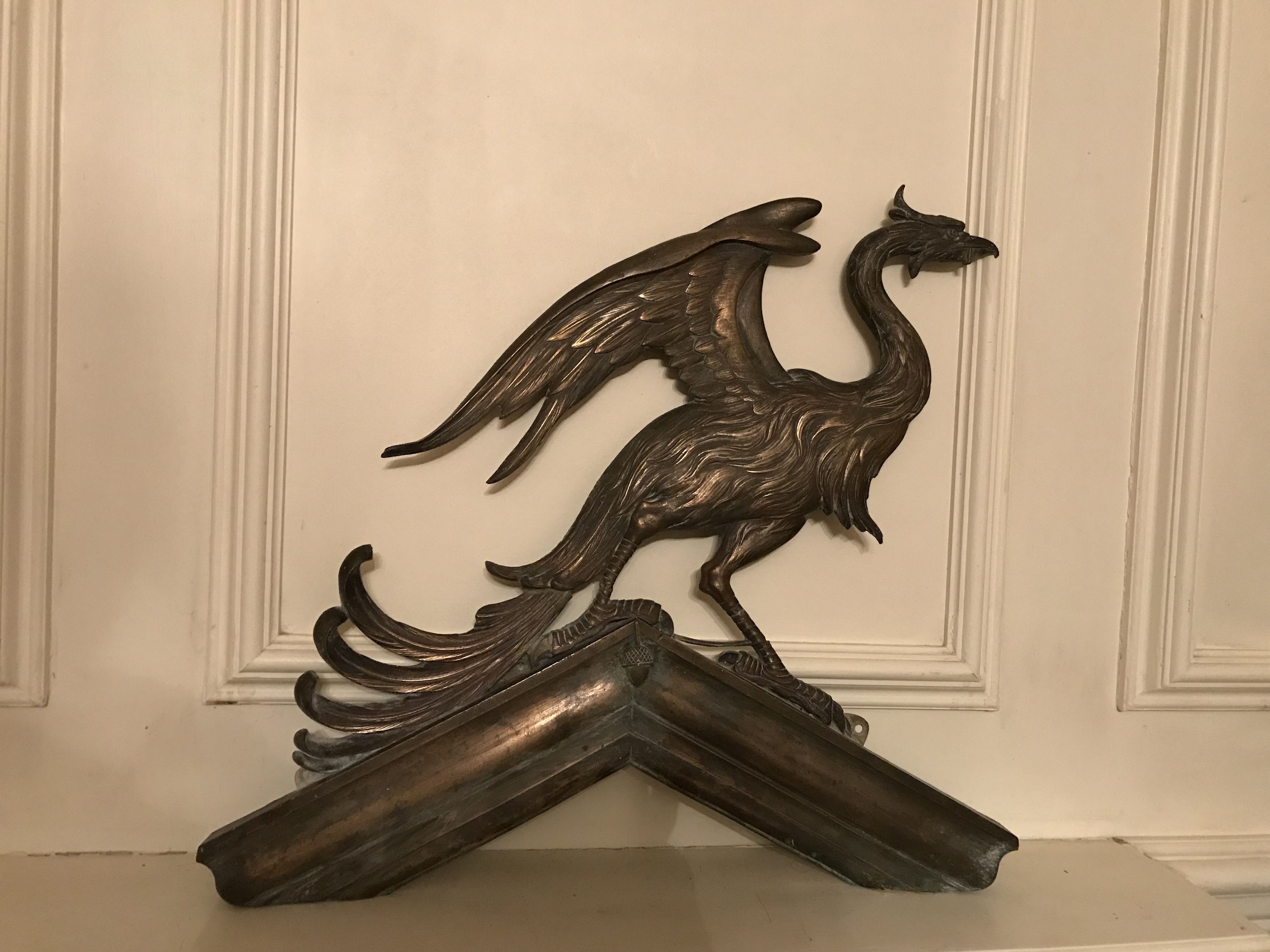 A 19th century bronze architectural pediment with the elegant figure of a Ho Ho bird decorating the apex.
Height: 19" (48cm) Width: 20 1/2" (52cm) Depth: 1/8" (3mm)
Although displayed here sitting on a surface, there are fixing holes which would allow for it to be wall mounted.
A 19th century bronze architectural pediment with the elegant figure of a Ho Ho bird decorating the apex.
Height: 19" (48cm) Width: 20 1/2" (52cm) Depth: 1/8" (3mm)
Although displayed here sitting on a surface, there are fixing holes which would allow for it to be wall mounted.


‘The Compromise’ by Thierry Bruet
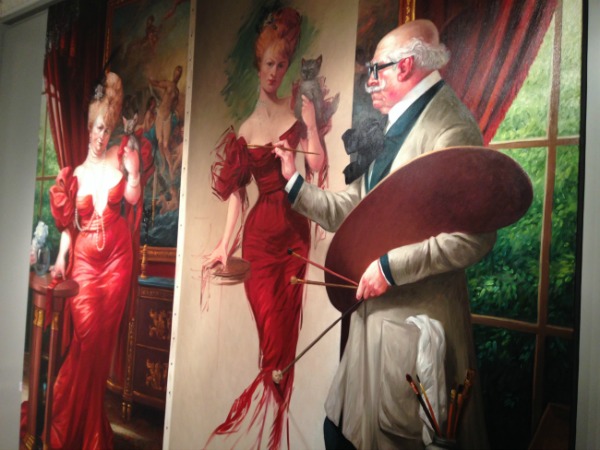
Laugh or cry, the work of French painter & sculptor Thierry Bruet certainly prompts reaction.
A master of his medium, Bruet uses his art to express his witty and satirical observations of life warts and all. He has a remarkable knowledge and appreciation of classical art and design. This elegance and refinement often provides the setting for his work, against which he places his caricatured subjects, accentuating the grotesque to create tension and surprise.

‘Compromission’ (The Compromise) above captures this perfectly.
Using his best judgement, the artist employs his skills to create a flattering, rather than realistic portait of his client.
'Fashion week' is equally provocative, with it's gruesome caricaturisation of the fashion world, as the old women enviously look at the young ladies as they parade the catwalk.
With 'Cougar & Dandy' seen above, there is the question as to who here has made the real catch.


Restoration of magnificent Blashfield Terracotta urns for the Burghley Estate in Lincolnshire

Anthemion are very proud to have been involved with the recent restoration of the four magnificent 19th century Terracotta urns which form the centre piece of the formal setting of the South Garden.
 Built and mostly designed by William Cecil, Lord High Treasurer to Queen Elizabeth I, between 1555 and 1587, Burghley is one of the largest and grandest houses of the first Elizabethan Age.
The South Garden which can be viewed from the windows of the State Rooms, has undergone various changes over the years. The sculpted yew hedges and topiary which provide the formal structure of the garden were planted in the late 19th century, and it was at this time too that James Marriot Blashfield was commissioned to produce the four grand urns.
Built and mostly designed by William Cecil, Lord High Treasurer to Queen Elizabeth I, between 1555 and 1587, Burghley is one of the largest and grandest houses of the first Elizabethan Age.
The South Garden which can be viewed from the windows of the State Rooms, has undergone various changes over the years. The sculpted yew hedges and topiary which provide the formal structure of the garden were planted in the late 19th century, and it was at this time too that James Marriot Blashfield was commissioned to produce the four grand urns. The restorations have been part of the Burghley Trust's commitment to recreating the garden as it was in the 1960's when the 6th Marchioness of Exeter installed exuberant beds of roses in the garden and had the urns converted into fountains.
Anthemion were commissioned to undertake the restoration and consolidation of the vases, on the understanding that in carrying out the work, our stone masons would retain the original character of the pieces, and that the repairs would be undertaken using materials and techniques that were sympathetic to the those employed when the vases were originally made.
After undergoing four month's of restoration in our workshops, the vases are now back on display in the South Garden and are currently awaiting commissioning as fountains.
The restorations have been part of the Burghley Trust's commitment to recreating the garden as it was in the 1960's when the 6th Marchioness of Exeter installed exuberant beds of roses in the garden and had the urns converted into fountains.
Anthemion were commissioned to undertake the restoration and consolidation of the vases, on the understanding that in carrying out the work, our stone masons would retain the original character of the pieces, and that the repairs would be undertaken using materials and techniques that were sympathetic to the those employed when the vases were originally made.
After undergoing four month's of restoration in our workshops, the vases are now back on display in the South Garden and are currently awaiting commissioning as fountains.


Home and hearth – the comfort of the fire

 As the temperature drops and the bite of the winter winds sweep across the country, we are delighted to bring you details of some items that should help keep the warmth and glow of the home alive.
Take for example this late 19th century cast iron basket supported on a pair cast iron andirons with scrolled bases and columned shank with brass collar and urn finials to top.
As the temperature drops and the bite of the winter winds sweep across the country, we are delighted to bring you details of some items that should help keep the warmth and glow of the home alive.
Take for example this late 19th century cast iron basket supported on a pair cast iron andirons with scrolled bases and columned shank with brass collar and urn finials to top.
 Stoke the fire with this set of 19th century steel fire irons, and use the ember tongs to adjust the coals.

Lancelot ‘Capability’ Brown – celebrating 300 years
 The architectural historian Nicholas Pevsner (1902-1983) called the English landscape garden Britain's major contribution to the visual arts.
2016 marks the 300th anniversary of possibly England's greatest and finest of the landscape gardeners - Lancelot 'Capability' Brown (1716-1783). Responsible for the creation of over 260 of England's finest Georgian landscape gardens, he changed the face of landscape design in England and beyond.
Sweeping away much of what had gone before his landscapes were often readily recognisable by their vast expanses, idealised countrysides of lakes, trees and rolling parkland, such as still remains in place today at such places as Blenheim, Croome, Harewood and Stowe.
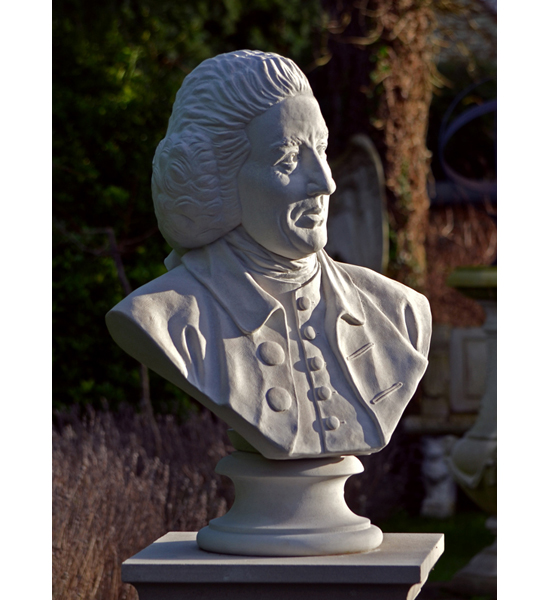
For a man so highly respected in his own lifetime and with such considerable achievements to his name, it is surprising to learn that no portrait bust has ever been created of him. Until now.
Inspired by the famous Nathaniel Dance portrait of 1773, the first ever portrait bust of Brown is now available.
The architectural historian Nicholas Pevsner (1902-1983) called the English landscape garden Britain's major contribution to the visual arts.
2016 marks the 300th anniversary of possibly England's greatest and finest of the landscape gardeners - Lancelot 'Capability' Brown (1716-1783). Responsible for the creation of over 260 of England's finest Georgian landscape gardens, he changed the face of landscape design in England and beyond.
Sweeping away much of what had gone before his landscapes were often readily recognisable by their vast expanses, idealised countrysides of lakes, trees and rolling parkland, such as still remains in place today at such places as Blenheim, Croome, Harewood and Stowe.
For a man so highly respected in his own lifetime and with such considerable achievements to his name, it is surprising to learn that no portrait bust has ever been created of him. Until now.
Inspired by the famous Nathaniel Dance portrait of 1773, the first ever portrait bust of Brown is now available.


Portrait by Nathaniel Dance. National Portrait Gallery, London

Crowther’s craftsmen breathe new life into Moroccan onyx

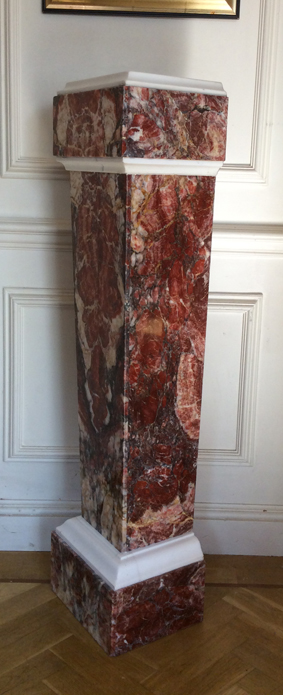 This stunning pair of Moroccan onyx pedestals were created by the craftsmen of Crowther of Syon Lodge in the 1960s from materials which once clad the walls of one of J. Lyon’s tea rooms in London.
Lyons is a name synonymous worldwide with tea.
Opening their first tea shop in September 1894 at 213 Piccadilly in under 20 years, J.Lyons became the largest baker in London, the largest tea merchant in the world and the largest restaurant operator in the world.
By 1900 there were 37 tea shops in London alone, and expansion was happening into the provinces with branches in Manchester, Liverpool, Leeds and Sheffield.
The early tea room exteriors were enticing and extrovert and the interiors were often glamorous and intended to evoke the great Victorian exhibitions and Parisian cafes.
This stunning pair of Moroccan onyx pedestals were created by the craftsmen of Crowther of Syon Lodge in the 1960s from materials which once clad the walls of one of J. Lyon’s tea rooms in London.
Lyons is a name synonymous worldwide with tea.
Opening their first tea shop in September 1894 at 213 Piccadilly in under 20 years, J.Lyons became the largest baker in London, the largest tea merchant in the world and the largest restaurant operator in the world.
By 1900 there were 37 tea shops in London alone, and expansion was happening into the provinces with branches in Manchester, Liverpool, Leeds and Sheffield.
The early tea room exteriors were enticing and extrovert and the interiors were often glamorous and intended to evoke the great Victorian exhibitions and Parisian cafes. In 1909 the first Lyons Corner House was opened on Coventry Street. The Corner Houses were much larger than the tea rooms, with a greater appeal to the middle classes. Live bands and an informal atmosphere cemented their popularity. The Coventry Street outlet became the Lyons flagship, and seated 2,000 diners on multiple floors. It was the largest restaurant in the world. A second Corner House at the Strand opened in 1915, capable of seating 1,200 diners.
In their heyday, Lyons had 250 Corner Houses in London, with over half a million meals being served every day, and part of the ritual of the diners was tea drinking. In 1922 it was estimated that seven million people drank Lyons tea each week.
Unfortunately their popularity was not to last and by 1969 the number of tea rooms had declined to 120, and many were loss-making.
The te
In 1909 the first Lyons Corner House was opened on Coventry Street. The Corner Houses were much larger than the tea rooms, with a greater appeal to the middle classes. Live bands and an informal atmosphere cemented their popularity. The Coventry Street outlet became the Lyons flagship, and seated 2,000 diners on multiple floors. It was the largest restaurant in the world. A second Corner House at the Strand opened in 1915, capable of seating 1,200 diners.
In their heyday, Lyons had 250 Corner Houses in London, with over half a million meals being served every day, and part of the ritual of the diners was tea drinking. In 1922 it was estimated that seven million people drank Lyons tea each week.
Unfortunately their popularity was not to last and by 1969 the number of tea rooms had declined to 120, and many were loss-making.
The te arooms and corner houses fell prey to the more trendy coffee bars of Charles Forte, as well as the increasing appeal of fast food and ethnic cuisine. The Coventry Street Corner House eventually closed in 1970 and The last tea shop closed in 1976.
Defying Gravity ….. David Wynne
 Stunning sculpture of Boy and a Dolphin by David Wynne
A towering 13 feet in height this magnificent sculpture is a landmark sight on Cheyne Walk, Chelsea at the foot of the Albert Bridge. The model for the boy is in fact the sculptor’s 9 year old son - Roland, who appears to fly through the air as he holds on tightly to the fin of the dolphin. A technical masterpiece in which the boy and dolphin are cantilevered to create a 3-dimensional work that appears to truly defy gravity.
David Wynne was a self-taught artist who established his studio on Campden Hill, Holland Park. One of his earliest commissions was sculpting the four heads of The Beatles. Over the years he sculpted a huge number of important public works, including Guy the Gorilla, a portrait of Her Majesty the Queen and his most important royal project: the central section of the Queen Elizabeth gate installed at Hyde Park Corner in commemoration of the Queen Mother’s 90th birthday in 1990.
Wynne studied Zoology at Cambridge University and his passion for the natural world and movement really comes across in the bold fluid form of this sculpture.
Originally conceived in 1972 as a small piece 1:6 the size of the Albert Bridge model, as a limited edition of 6. Number 4 of this edition is being offered for sale by Christies.
In 2017, Christies sold a larger version conceived in 1973 which was 1:3 of the size of the Embankment model. Number 5 in an edition of 6 this sold for £ 353,000.
The Albert Bridge piece was completed in 1974 – and is an edition of three – the other two are are in Massachusetts and Minnesota.

PLANTATION HOUSE, EC3 The City of London’s Mecca of Tea
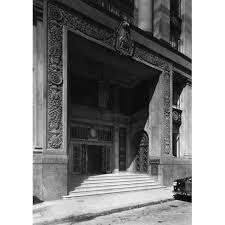
A unique opportunity to acquire the massive Portland stone entranceway from the City of London's Plantation House.

Main Entrance, Plantation House, London EC3
Plantation House, built in the 1930s was at the time the City’s second largest building. Covering a major site on Fenchurch Street, now home to Plantation Place, the building was designed by Albert W Moore to house the Tea Trade’s commodity traders all under one roof - the tea plantation companies, the brokers, the shippers and even allied industries like sugar, timber and rubber.
The building was financed by John Joseph Bunting, known as JJ & ‘The Prophet of Tea’ for his predictions of the future of tea in the 1930s. The building’s design was inspired by the American Skyscrapers of the time, but not as high; it was considered by many the most elegrant building in the City. Although covering a large area it was noted for its warm cosiness aiding good strong relationship to be built between all those working and visiting there.
In the 1980s for a period of 14 years it became home to the London Metal Exchange

Visit Plantation Place today and you will be standing in the shadow of London's famous ‘Walkie Talkie’ building, home to London’s highest public gardens.

Regency design chimneypiece with coloured marble inlays, circa 1900
 A decorative marble chimneypiece of Regency design with various inlaid marbles including
Siena, Malachite and Rosso Levanto .
Approximate dimensions - height: 52” width: 69”
Aperture height: 38” Aperture width: 38”
A decorative marble chimneypiece of Regency design with various inlaid marbles including
Siena, Malachite and Rosso Levanto .
Approximate dimensions - height: 52” width: 69”
Aperture height: 38” Aperture width: 38”


A Regency Siena & white marble chimneypiece
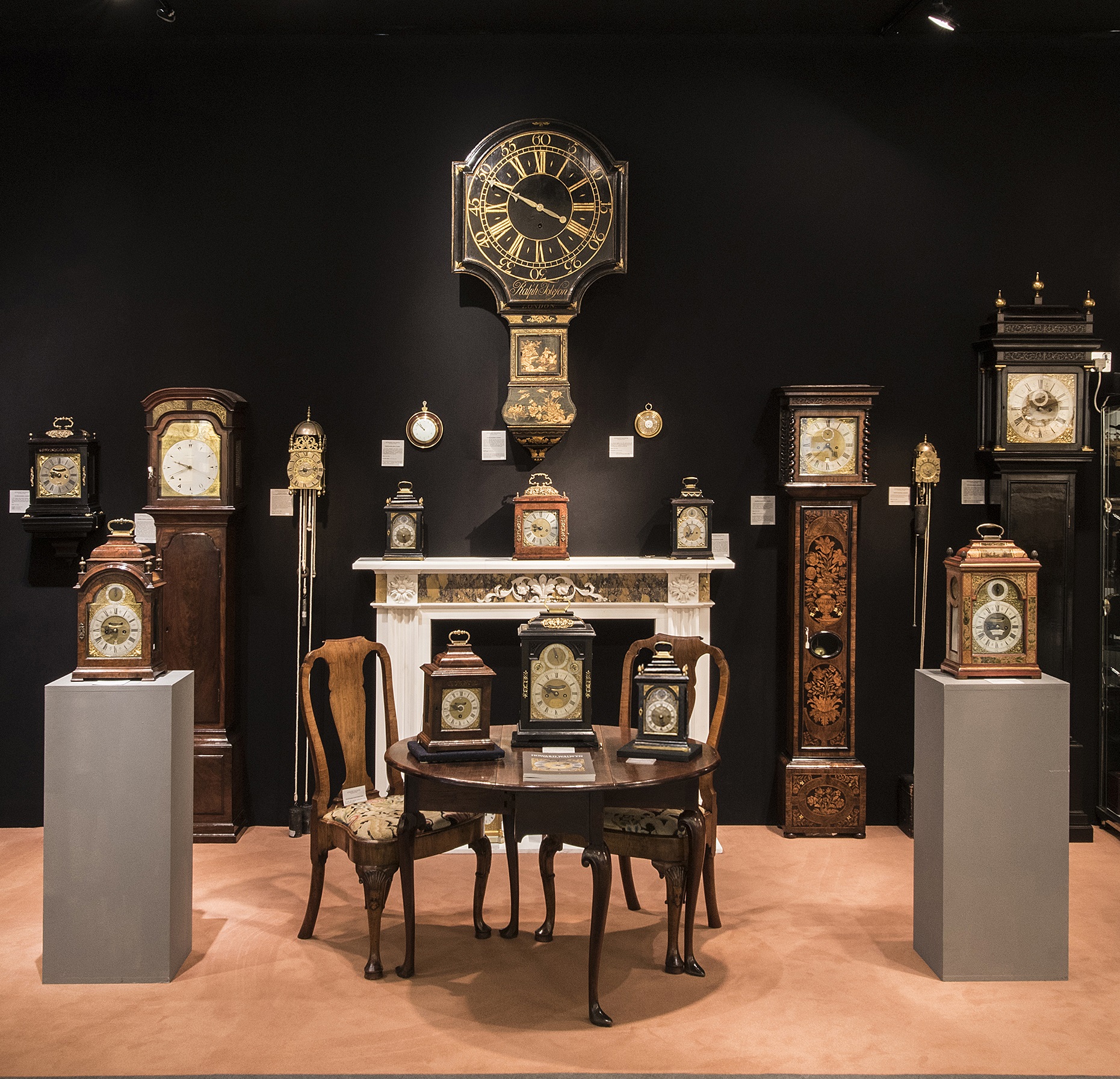


A Regency white marble chimneypiece with reeded jambs and floral blockings. The Siena marble frieze with applied white marble acanthus and floral leaf decoration to centre.
Height: 46 1/4” Width: 65” Shelf depth: 8” Aperture height: 36 1/4” Aperture width: 39”


From the wine cellars of London’s legendary Cafe Royal
 Since opening its doors in 1865, the Cafe Royal has been an iconic landmark on London’s social scene, attracting famed patrons, from royalty and celebrity, to the creative and the notorious.
Virtually everyone in London society has passed through its doors: Oscar Wilde hallucinated on absinthe in the grill room - he apparently mistook a waiter stacking chairs for a man picking tulips - and had his only civil meeting with his nemesis the Marquis of Queensberry, before launching his disastrous libel action.
Located at the southern end of Regent Street, in one of the famous colonnaded terraces conceived by the pre-eminent architect John Nash in the early 1800s. It was founded by the French refugee Daniel Nicholas Thévenon, a French wine merchant, who arrived in London with £5 after fleeing his creditors in Paris.
Since opening its doors in 1865, the Cafe Royal has been an iconic landmark on London’s social scene, attracting famed patrons, from royalty and celebrity, to the creative and the notorious.
Virtually everyone in London society has passed through its doors: Oscar Wilde hallucinated on absinthe in the grill room - he apparently mistook a waiter stacking chairs for a man picking tulips - and had his only civil meeting with his nemesis the Marquis of Queensberry, before launching his disastrous libel action.
Located at the southern end of Regent Street, in one of the famous colonnaded terraces conceived by the pre-eminent architect John Nash in the early 1800s. It was founded by the French refugee Daniel Nicholas Thévenon, a French wine merchant, who arrived in London with £5 after fleeing his creditors in Paris.
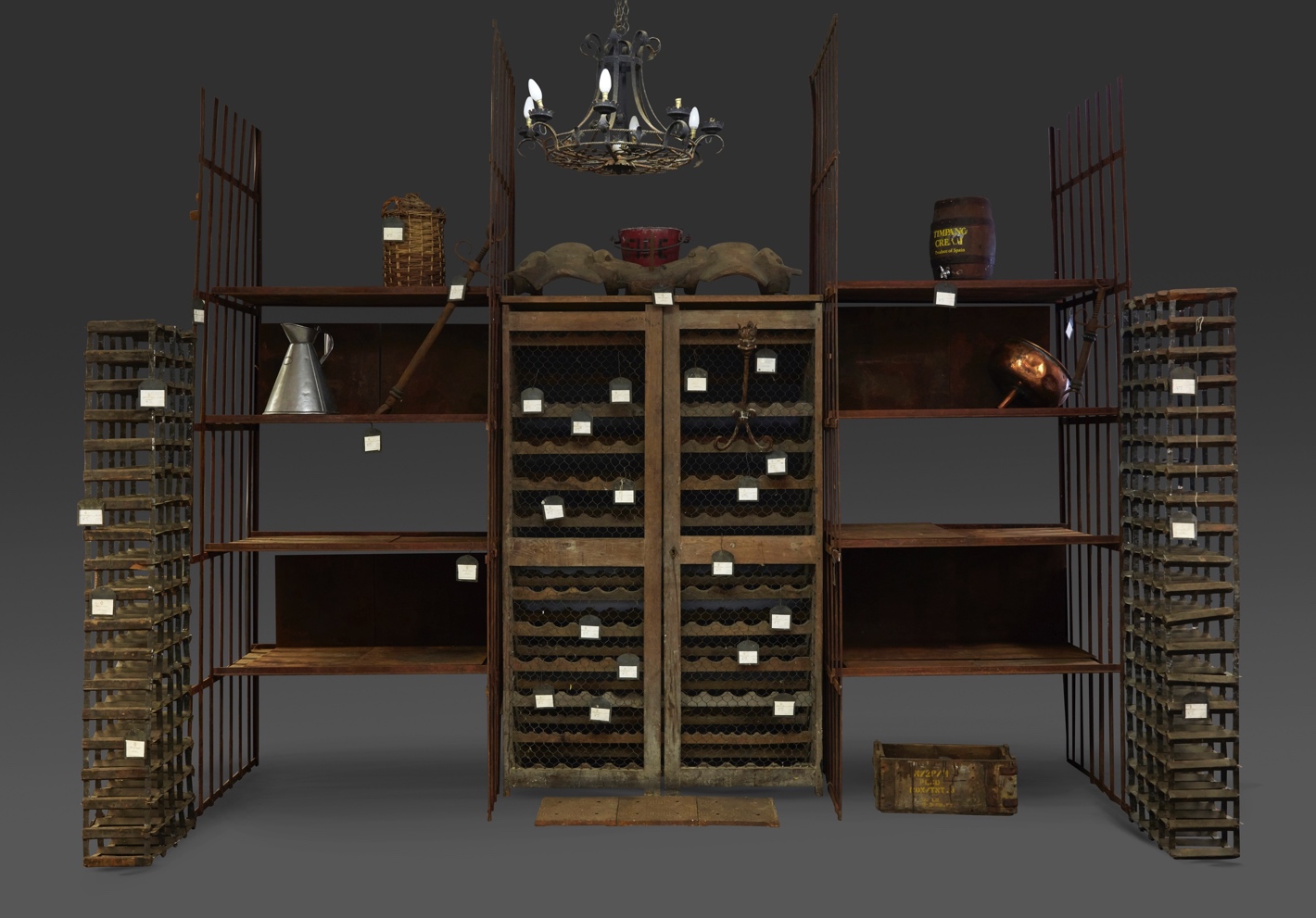
Wrought iron wine racking from the famous wine cellars

Wine labels with business card from the Banqueting Head Waiter, & on the reverse a hand-written inscription of the wine

wrought iron gothic style chandeliers

Pair of wrought & cast iron carriage lamps
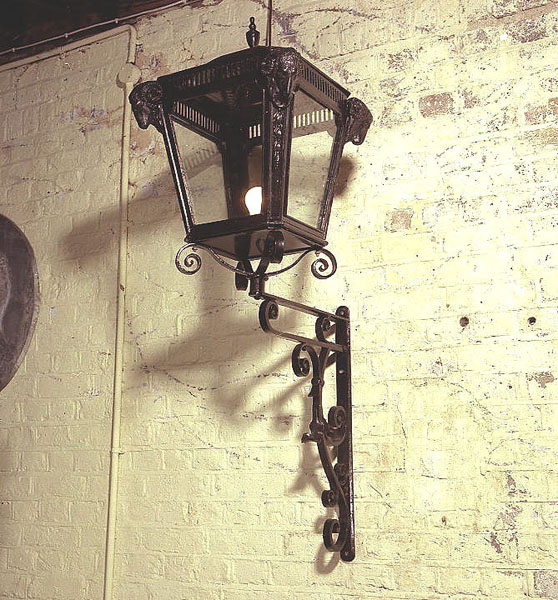 Made to commission 30 years ago by the then resident blacksmith at Crowther of Syon Lodge.
The design of the lanterns was inspired by the wrought iron lamp stands which are at the entrance of the 18th century Robert Adam designed Syon Lodge as shown below.


Our recent travels have alerted our eyes to some interesting finds.
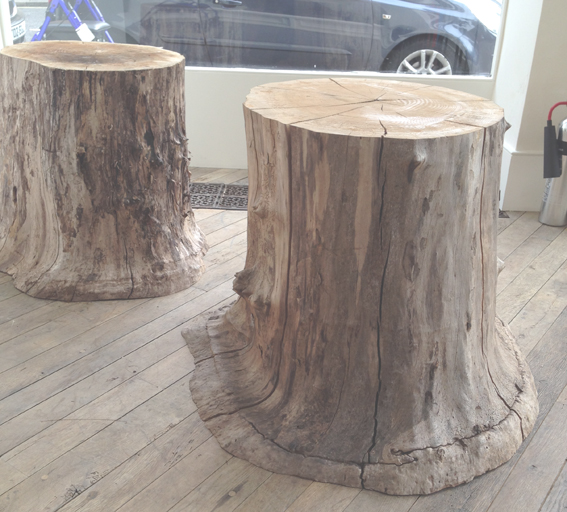
Mother nature's own design. Solid walnut tree trunks, the perfect table bases.
Height: 30" Depth: 38" Width: 26"
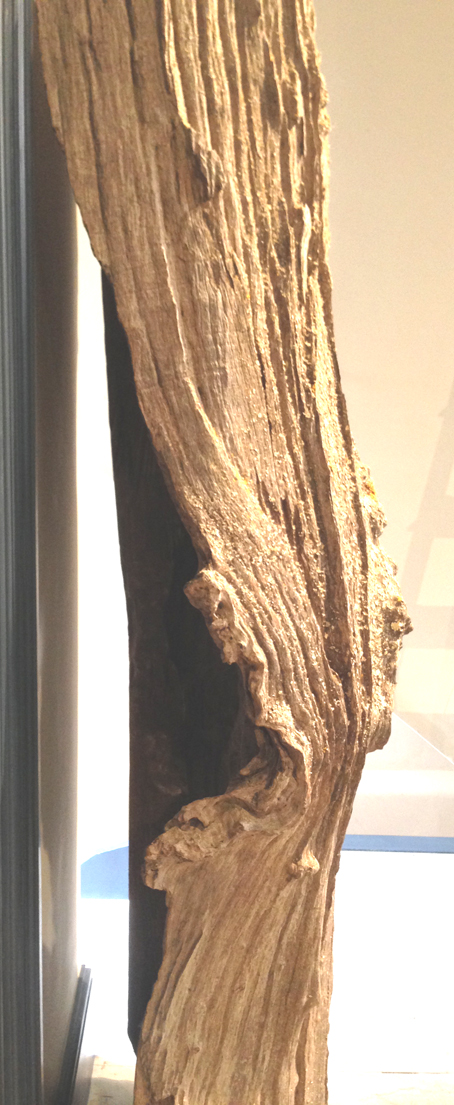
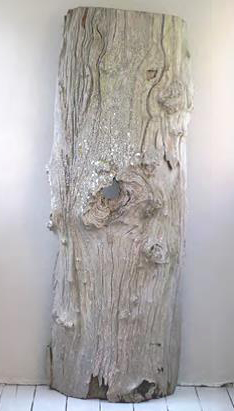
Sinewy and gnarled, a large section of trunk from a hardwood tree, sculpted by nature's own fair hand. Height: 80" Width: 30"
Also worthy of a look is this monumental pair of Regency period Roman Revival torcheres. Height: 9ft 4in
And for the garden, two pairs of unusual square tapered form stone planters, removed from Nawton Tower, Yorkshire.



‘Spirit Of The Garden’
 The essence of the garden and the cycle of the Seasons is encapsulated in this striking bronze figure of Persephone, which is to go under the hammer in London in September.
Created by sculptor Margaret Wrightson (1877-1976) for Lady Londonderry, wife of the 6th Marquess of Londonderry, and located in their garden at Wynyard Park, County Durham in 1913.
Lady Londonderry passionately loved the gardens at Wynward and was evidently much admiring of this statue, as she wrote tenderly of the myth of the garden spirit in her private journal, and included photographs of when the sculpture was first installed in 1913.


British Fashion Designer Nicole Farhi reveals her skill as a sculptor

Two years ago Nicole Farhi left the frenetic world of fashion to pursue her love for sculpting. An interest which was sparked some 30 years ago, and which she developed under the tutorage and mentoring of Sir Eduardo Paolozzi, one of the most important and inventive British sculptors of the twentieth century. Farhi now finds herself totally absorbed in her passion for this art form.
Her debut show comprises some twelve busts of famous names from the worlds of art, fashion, stage and screen, including amongst them Dame Judy Dench, Helena Bonham Carter, Anna Wintour, Alberto Giacometti and Tom Stoppard.
The busts are available for purchase with editions limited to 9
 .
.

Specialist garden sale offers opportunity for acquisition of the exceptional & rare

Fine quality garden pieces are becoming harder and harder to find, so it is exciting to see the latest offerings from the garden specialist sale which is to be held in the UK later this month.
Amongst the items on offer is the extremely rare Georgian Lead cistern, shown below, which is dated 1754 and bears the initials 'F S D'. While originally intended to collect and store rainwater, they have in more recent years been used to accent the garden, providing a wonderful container for planting.
For planters of a smaller scale there are plenty on offer, although those particularly worthy of a mention is the 19th century cast iron pair by Coalbrookdale, produced around 1870. This open weave basket support on a stag's head and rustic pedestal is an extremely rare model. It can be found in the Coalbrookdale catalogue of 1875.
The Coalbrookdale manufactory is also known for its production of various seats of different designs and complexities. One of the rarest and most intricate of these is the Osmunida Fern pattern of which there is a fine example included in the sale.
Also cast iron, there are two pairs of mid 19th century cast iron planters, which are stamped inside with the makers' stamp 'Leville Pailliette & C Sharlville Ardennes model depose Brevete Sgdg'.
The William & Mary sundial, circa 1690, which is inscribed with the arms of the Cornwallis family, is probably the star in terms of rarity and quality of craftsmanship. The bronze plate is signed Henricus Wynne. Wynne (fl.1654-1709) was a member of, and in 1690, Master of the Clockmaker’s Company. The construction of the plate is referred to as a double-horizontal sundial comprising a ‘double’ gnomon and complementary hour scales on the dial plate, and as such functions both as an instrument for time as well as providing various astronomical data. The construction of such plate was complex and required a high degree of mathematical knowledge and capability for accurate engraving. Wynne is known to have produced some of the finest and largest (36 inch diameter) of these double-horizontal sundials in the country. One of these was set up on the terrace at Windsor Castle in the Reign of Charles II.
The plate bears the arms of the Cornwallis family and the latitude for which the gnomon is set 52 degrees 24 minutes is about right for Brome Church, Suffolk.


At the heart of the home
 As the dark nights draw in, there's something very pleasing that the warm glow of the fire brings to the hearth and home.
Our recent travels have revealed some interesting offerings, various of which are shown below.
As the dark nights draw in, there's something very pleasing that the warm glow of the fire brings to the hearth and home.
Our recent travels have revealed some interesting offerings, various of which are shown below.


The Genius of Victorian architect designer William Burges


Referring to himself as an ‘art-architect', he placed as much importance on the interior decoration and furnishing he created, as the architectural detailing of the buildings he designed; employing a wealth of different materials – wood, stone, metal, paint and marble - to achieve the desired effect.
His taste for rich effects made him an extremely expensive architect to employ and consequently few people could afford him, but his was a highly individual style.
One of his most noteworthy commissions is that of Cardiff Castle which he undertook for John Crichton Smith, 3rd Marquis of Bute. He demolished or completely re-designed the earlier work of Holland and Smirke, giving the castle a dramatic exterior with towers, pinnacles and crenellations, and sumptous interiors
The grate shown here bears similarities to the one designed by Burges for the Winter Smoking Room at Cardiff Castle, although the pillars are formed of mitres.
Made by Hart, Son & Peard, circa 1870, this cast iron and brass pillar dog grate is being sold. Please contact for more details.

The multi-facetted sundial, a rare and unique form
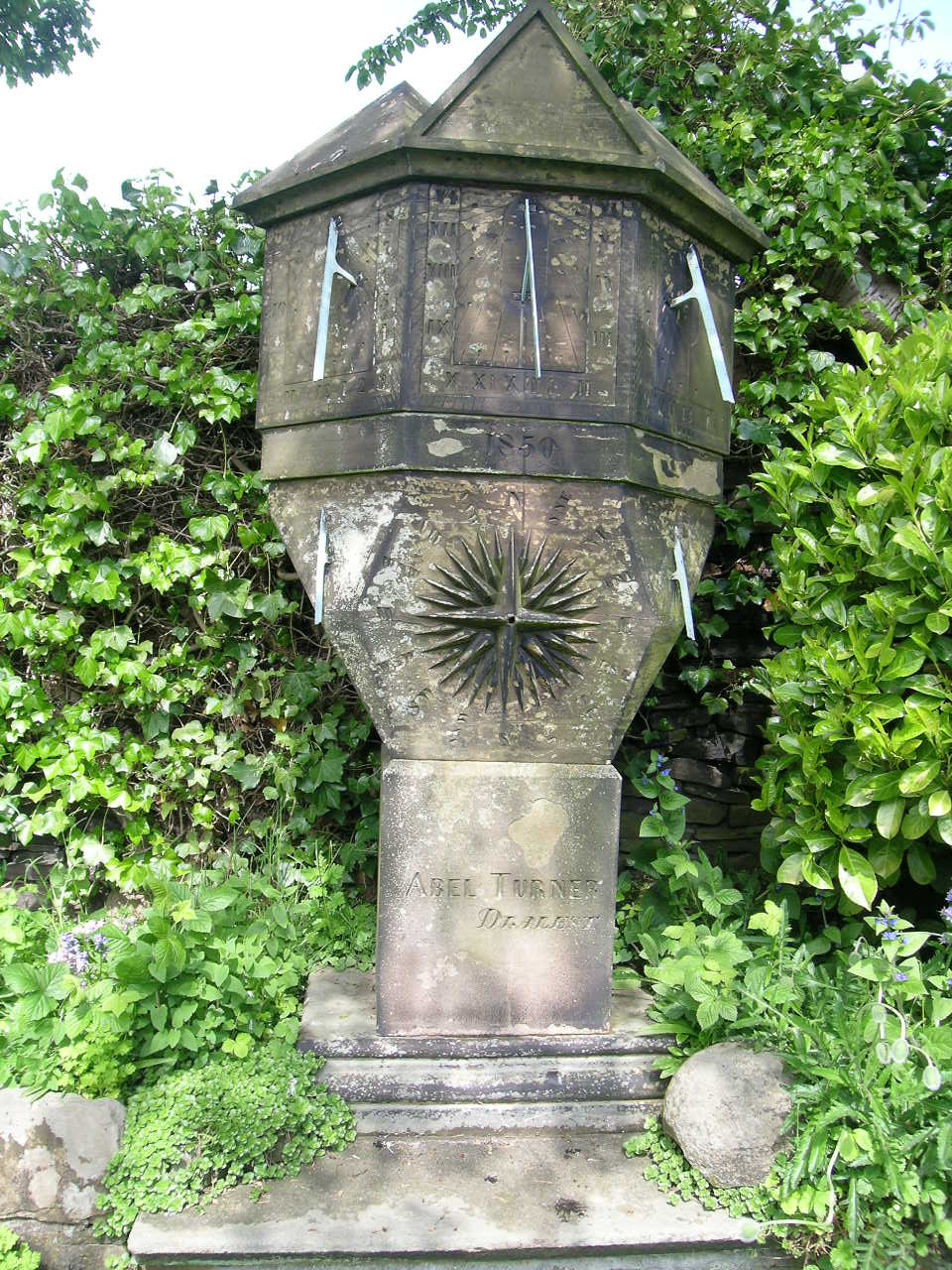


As the name suggests, the multi-facetted sundial is distinctive for its multiple clock faces, sometimes more than 50. Constructed from stone, these kind of sundials having a history stretching back some 350 years. Characteristically individual in appearance, their frequently complex designs, are a testament to the skill of the masons responsible for their design and construction. These statement pieces not only demanded considerable technical expertise but also an appreciation by the stone masons of science and mathematics, as they provided a basic means by which to tell the time.
The sundial shown here, which is constructed in six parts, has seven dials with a central relief carved with a thirty two point compass, and impressively stands at 92 1/2" .
It is inscribed '1850 / Abel Turner/Diallist', thought to be the stone mason Abel Turner who is recorded in the 1851 census in Wooldale, Yorkshire, the village in which this sundial has been in situ until now.
The country estates and castles of Scotland are home to a number of good examples of these kinds of sundials. Some are relatively simple, others are so complex that their purpose is clearly as much decorative as serving the function of time-piece. Good examples can be found at Glamis, Kildrummy Gardens, Haddo House, Culzean Castle and Kinnaird Castle.


Nobody Thought it Would Come To This
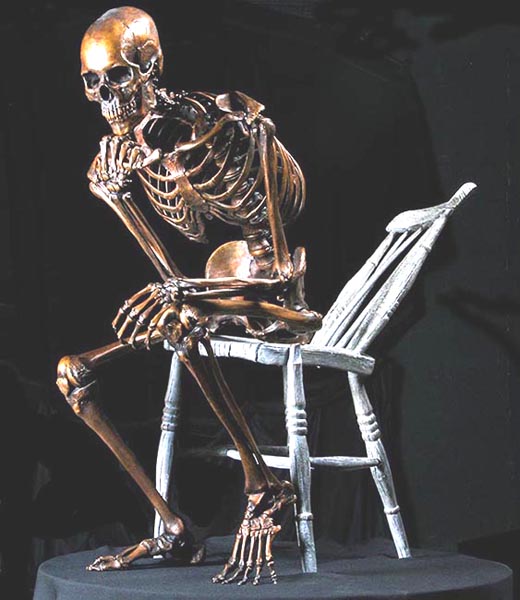 While Hans Haacke’s ‘Gift Horse’ makes a controversial stand on the Fourth Plinth in London’s Trafalgar Square, we bring you the work of artists Amanda & Bjorn Sjoling who use the skeletal form of the human body as an expression of life. The mechanical framework that makes life possible.
This husband and wife team have been producing works together since 2010.
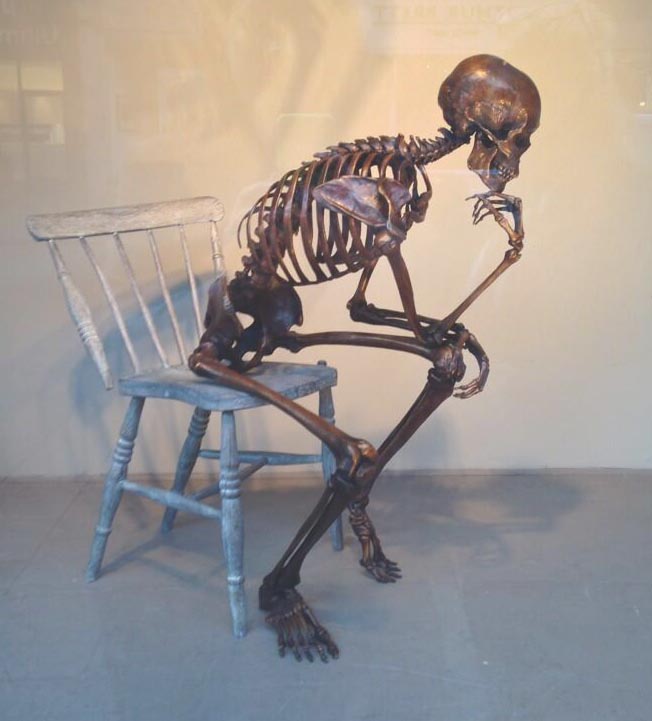
‘Beautiful Bones’ is one of their most ambitious works to date, in both technical and conceptual terms. It is somewhat reflective of Rodin’s ‘Thinker’ bared down to its very essence.
Even with the absence of a face and corporeal substance, the skeletal figure remains extraordinarily expressive.
Entirely self-taught Amanda and Bjorn’s work have a remarkable technical finesse. ‘Beautiful Bones’ is fine example of their unerring attention to detail and capability to create intricate, anatomically accurate and exceptionally finished figures.
A limited edition of 9
Height: 40 ½” Width: 40” Depth: 31”
While Hans Haacke’s ‘Gift Horse’ makes a controversial stand on the Fourth Plinth in London’s Trafalgar Square, we bring you the work of artists Amanda & Bjorn Sjoling who use the skeletal form of the human body as an expression of life. The mechanical framework that makes life possible.
This husband and wife team have been producing works together since 2010.
‘Beautiful Bones’ is one of their most ambitious works to date, in both technical and conceptual terms. It is somewhat reflective of Rodin’s ‘Thinker’ bared down to its very essence.
Even with the absence of a face and corporeal substance, the skeletal figure remains extraordinarily expressive.
Entirely self-taught Amanda and Bjorn’s work have a remarkable technical finesse. ‘Beautiful Bones’ is fine example of their unerring attention to detail and capability to create intricate, anatomically accurate and exceptionally finished figures.
A limited edition of 9
Height: 40 ½” Width: 40” Depth: 31”

A hand carved curved Limestone seat
 Carved from natural Limestone, a curved seat with scrolling bracketed arms and foot supports. The back made up of three panels, each carved with strapwork decoration. The top rail carved with swags and fruits centred by a grotesque mask.
Length: 9ft 6in
Carved from natural Limestone, a curved seat with scrolling bracketed arms and foot supports. The back made up of three panels, each carved with strapwork decoration. The top rail carved with swags and fruits centred by a grotesque mask.
Length: 9ft 6in
An interesting selection of 18th, 19th and 20th century cast iron fireplace linings
 Detail from a set of 18th century Adam design cast iron linings
Below left: One of a pair of 18th century panels from the Carron foundry, stamped with the maker's mark
Below centre & right: One of three decorative panels, patterned on both sides
Detail from a set of 18th century Adam design cast iron linings
Below left: One of a pair of 18th century panels from the Carron foundry, stamped with the maker's mark
Below centre & right: One of three decorative panels, patterned on both sides


Baronial design fireplace from the Norman country house of Orville H Bullitt

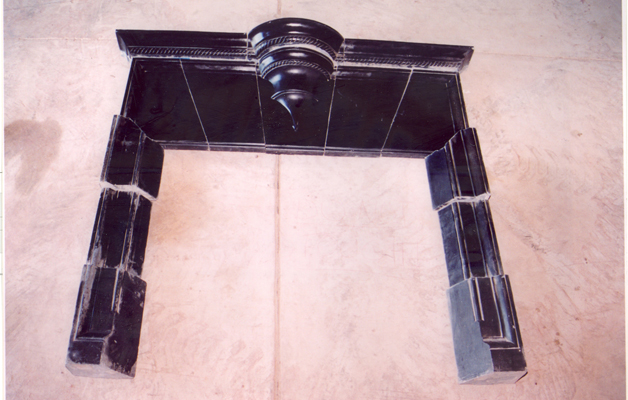
This imposing fireplace, was formerly located at the home of the banker, philanthropist and Director of the Philadephia orchestra, Orville H. Bullitt (1894-1979).
The Norman country house occupied by Orville Bullitt and his wife Susan, on the Oxmoor estate near Fort Washington, was designed in 1924 by the renowned Philadelphia based architects Mellor, Meigs and Howe.
Established by Mellor & Meigs in 1906, the two locally trained architects were joined in 1916 by George Howe who received his training at the Ecole des Beaux Arts.
From the outset their practice was a success, their designs which were very much reflective of historical English, French and Italian architecture, were favoured by the elite of Philadelphia Society. They created many suburban homes and townhouses in Philadelphia, as well as beautiful country estates in the surrounding area, such as Bullitt's Oxmoor Estate, and in the New England and mid-Atlantic states beyond.
The fireplace, carved from black soapstone is thought to have come from France, and is very much reflective of the Norman design favoured by Meigs, Mellor & Howe in the homes they created.
Width: 83 3/4" Height: 78"

Unusual console table with medallion by Morgan, Macaulay & Wade
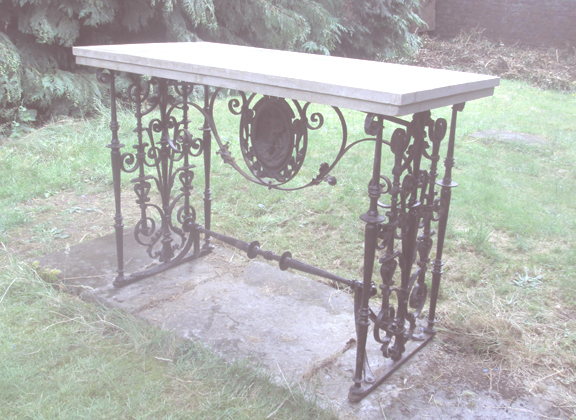
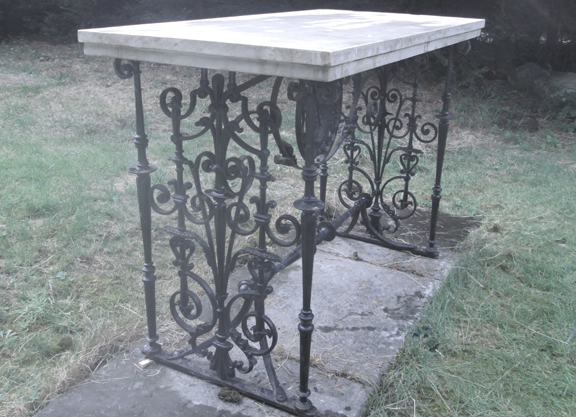

This decorative ironwork table with Portland stone top is an interesting piece. The plaque at the centre representing one of the Seasons, was patented in circa 1870 by the 19th century cast iron manufactory of Morgan, Macaulay & Wade; and is recognised as one of four medallions that feature on the company's Four Season bench, patented on 5th April 1870.
Portland top - 56 " x 27 1/2"
Istrian wellhead, from the private gardens of Mary Bellis
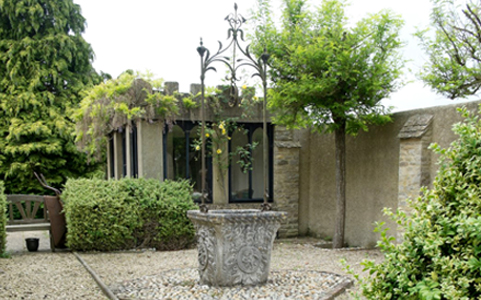
Mary Bellis was one of the most respected Antique dealers in England from the 1950’s to 1980s, a connoisseur in 16th & 17th English and European furniture and needlework.
The wellhead stood for many years in Mary’s private garden, where it had been admired by many of her clients who visited with her, however it was not for sale; and it was not until her death and the auctioning of her collection that it became available.
The wellhead, described as 18th century with later overthrow, was acquired at the auction by its current owner and seen here located in the courtyard garden of his manor house near Witney in Oxfordshire, where it has stood for the past 22 years.
It is carved from Istrian stone and is embellished on all four sides with high relief decoration. Large acanthus leaves accentuate each of the corners, with a renaissance styled lion’s head with a roundel below carved in high relief to the centre of each face.
The overthrow which spans across the wellhead, while elegantly achieved, is a later addition. The original in contrast, appears to have been fixed at the four corners.
Overall height: 117" approx. Width across top of wellhead: 30"




A striking 19th century figure of Venus
 A striking 19th century figure of Venus
Marble Cupid by John Gibson (1790-1866)
 Stunning figure of Cupid fetches £ 638,500 at Christies, King Street.
Executed in around 1937, John Gibson said of this work 'I look upon this statue as one of my best works.' It was acquired by Henry John Peachey, 3rd Baron Selsey , from the sculptor, and is one of four versions which were made.
Stunning figure of Cupid fetches £ 638,500 at Christies, King Street.
Executed in around 1937, John Gibson said of this work 'I look upon this statue as one of my best works.' It was acquired by Henry John Peachey, 3rd Baron Selsey , from the sculptor, and is one of four versions which were made.

Four Baroque designed plaster figures
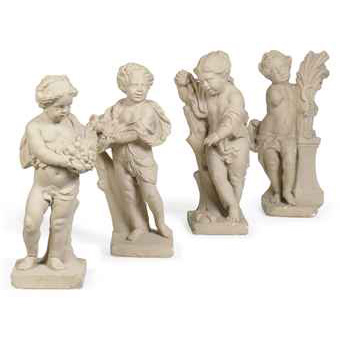 A set of four Baroque designed plaster figures of the Seasons in the manner of Pieter von Bauerscheit
19th century Marble Regency planter
 A 19th century Marble Regency planter
Georgian marble chimneypiece
 A white & fleur de peche marble chimneypiece of Georgian design
The Marble of Kings
 A striking Portoro Marble console table with gilded bronze figurative supports.


